
Sale
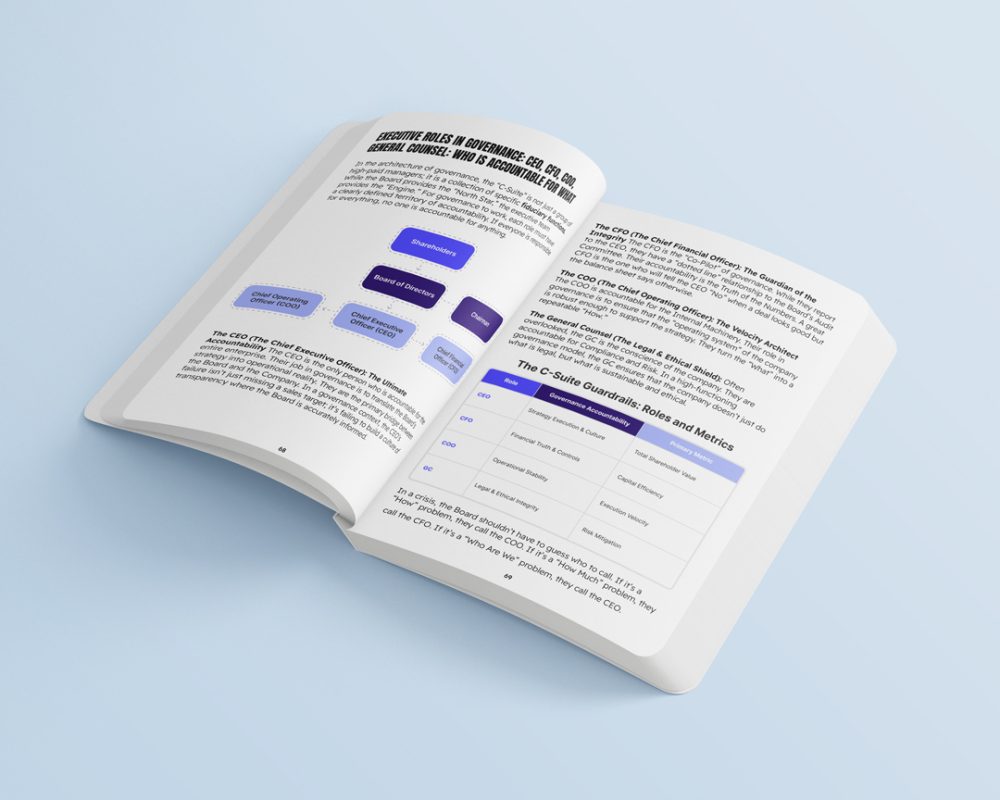
Corporate Governance Explained
Price range: $49 through $196

★★★★★ (4.91)
Loved by our amazing community
How companies are directed and kept in line, mapped through real structures and decision systems across “number” pages of usable knowledge.
- Master proven structures including decision rights matrices, power mapping, and governance charters
- Use practical tools like the governance audit, role clarity framework, and risk registers
- Learn from real failure patterns where weak governance destroyed companies from the inside
AS FEATURED IN


Choose one of the options:
 Risk-free Purchase: Full refund within 30 days
 Safe and Secure Checkout

 No additional fees. No subscription. No monthly billing.


Instant Access
After checkout.

One-time Payment
No monthly fees.

30-Day Guarantee
No questions asked.

30-Day Money-Back Guarantee.Love It, or Your Money Back.
You’ve got 30 days to judge it for yourself. If it’s not for you, we’ll refund every cent.
Description
About Corporate Governance Explained
Whether you are a founder, an executive, or a senior operator sitting close to the decisions that shape your company, this book gives you the structures to govern with control and clarity.
This eBook walks you through how companies are actually controlled, from mapping where power sits to defining how boards function, how decisions get made, and how accountability holds when things go wrong. It covers governance across private companies, family businesses, and startups, not just public corporations.
Covering roles, decision rights, risk oversight, and implementation, it ensures you can build a governance system that prevents politics, protects the business, and survives pressure. With real failure patterns and ready-to-use tools, this eBook becomes the go-to reference you reach for every time a governance question comes up.

Frontrunner in delivering top-tier digital business resources
Has been making waves with its flagship product
Shaping the future of digital business learning
Valuable resource in the ever-evolving world of business education


Table of contents 

-
Part 1: Why Governance Breaks Companies
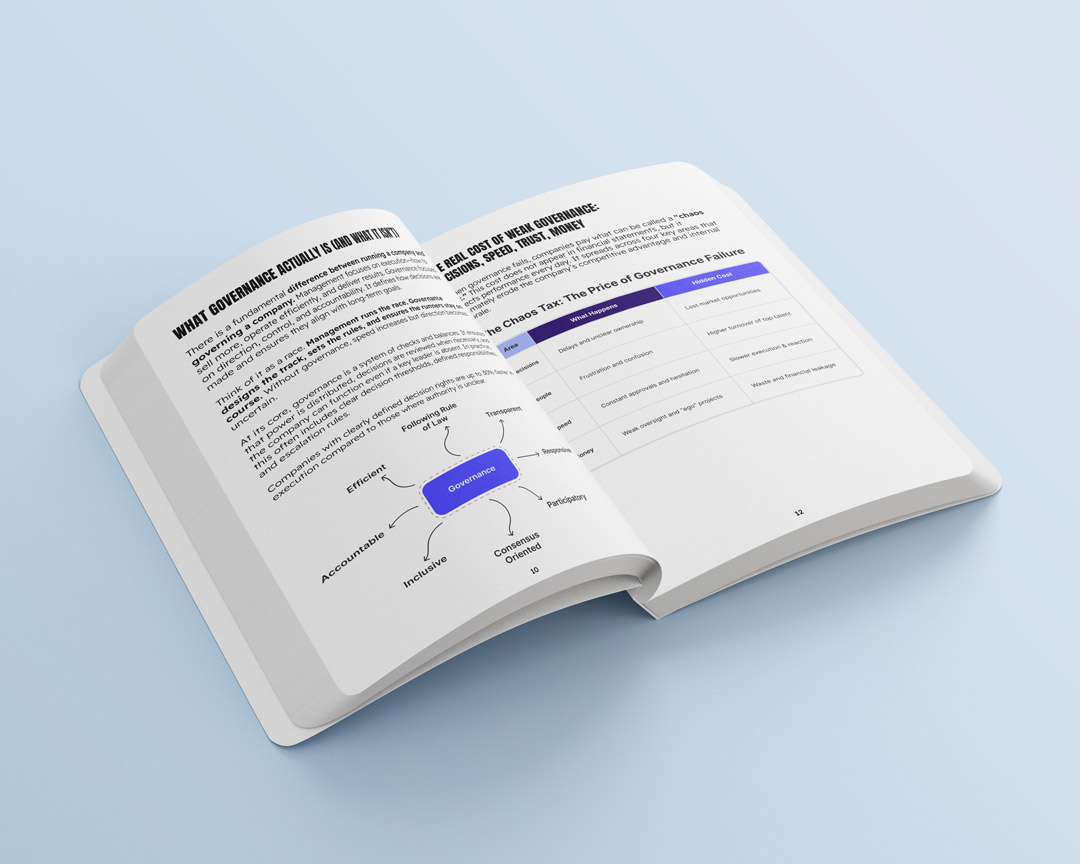
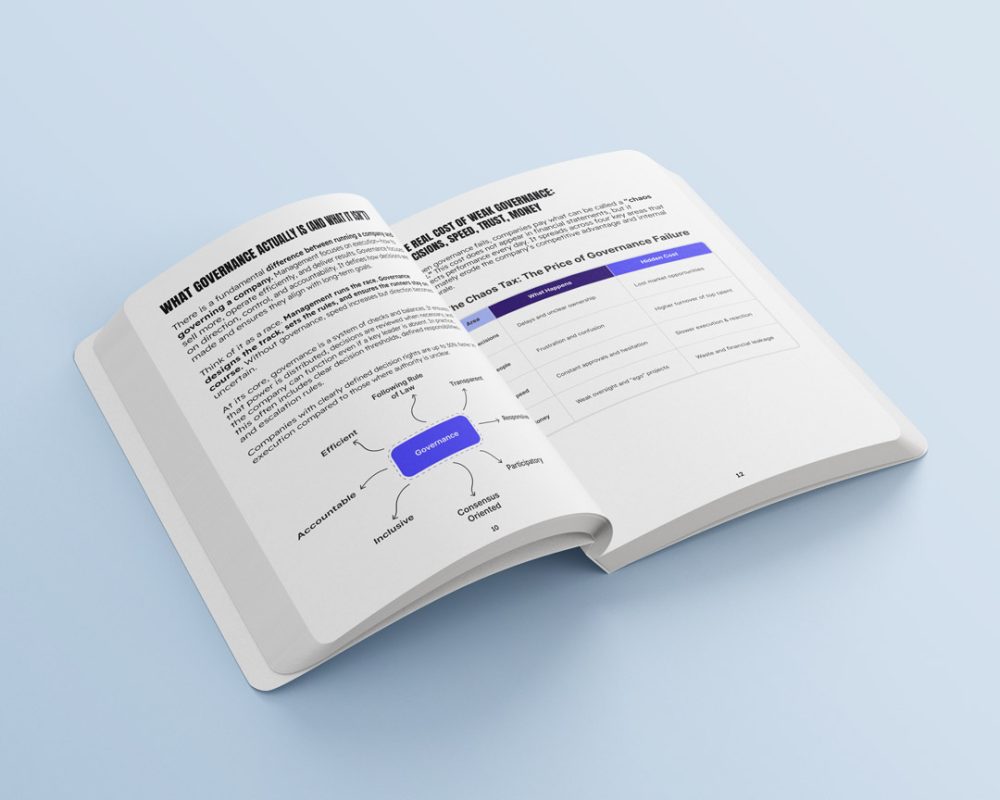
- What Governance Actually Is (and What It Isn’t)
- The Real Cost of Weak Governance: Decisions, Speed, Trust, Money
- How Companies Outgrow Their Decision-Making Structure
- The Three Failures That Destroy Companies from the Inside
- Why Private Companies Are More Exposed Than Public Ones
- The Governance Gap: What Founders and Operators Get Wrong Early
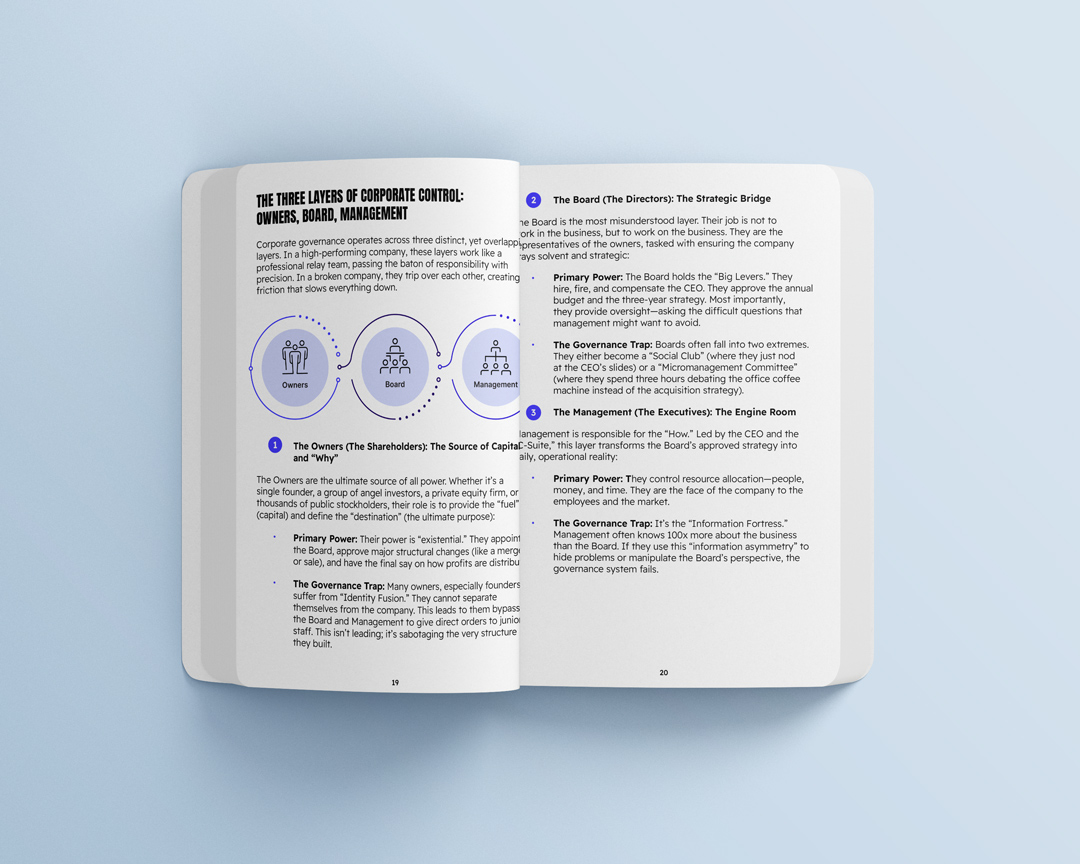
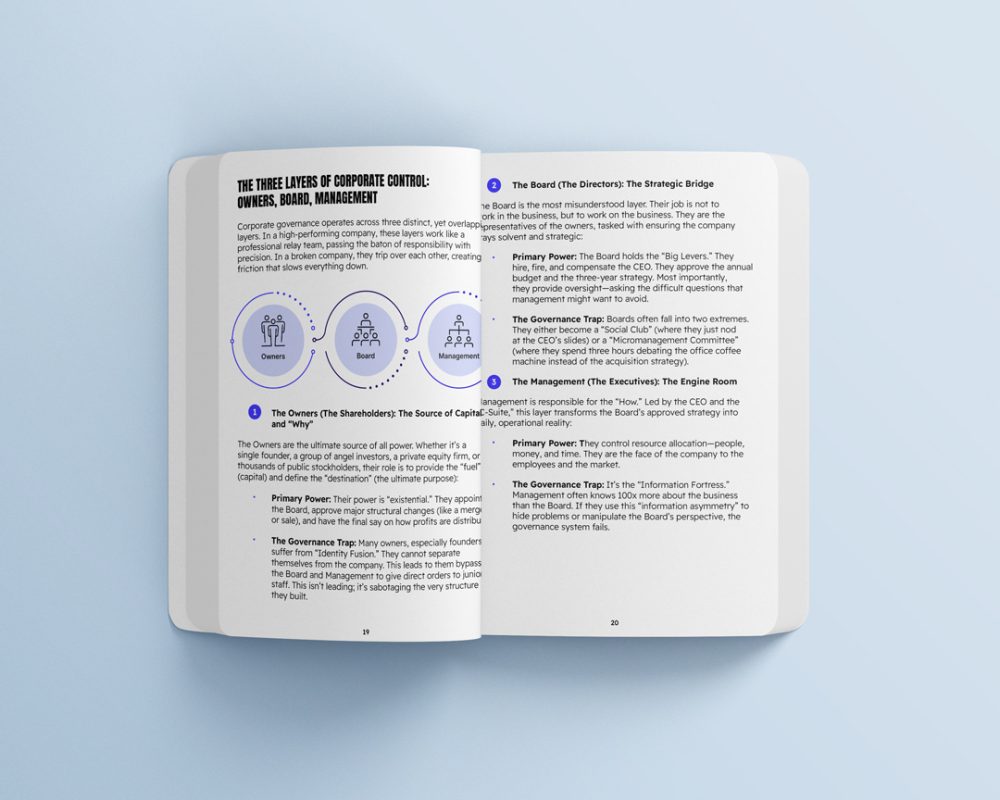
- The Three Layers of Corporate Control: Owners, Board, Management
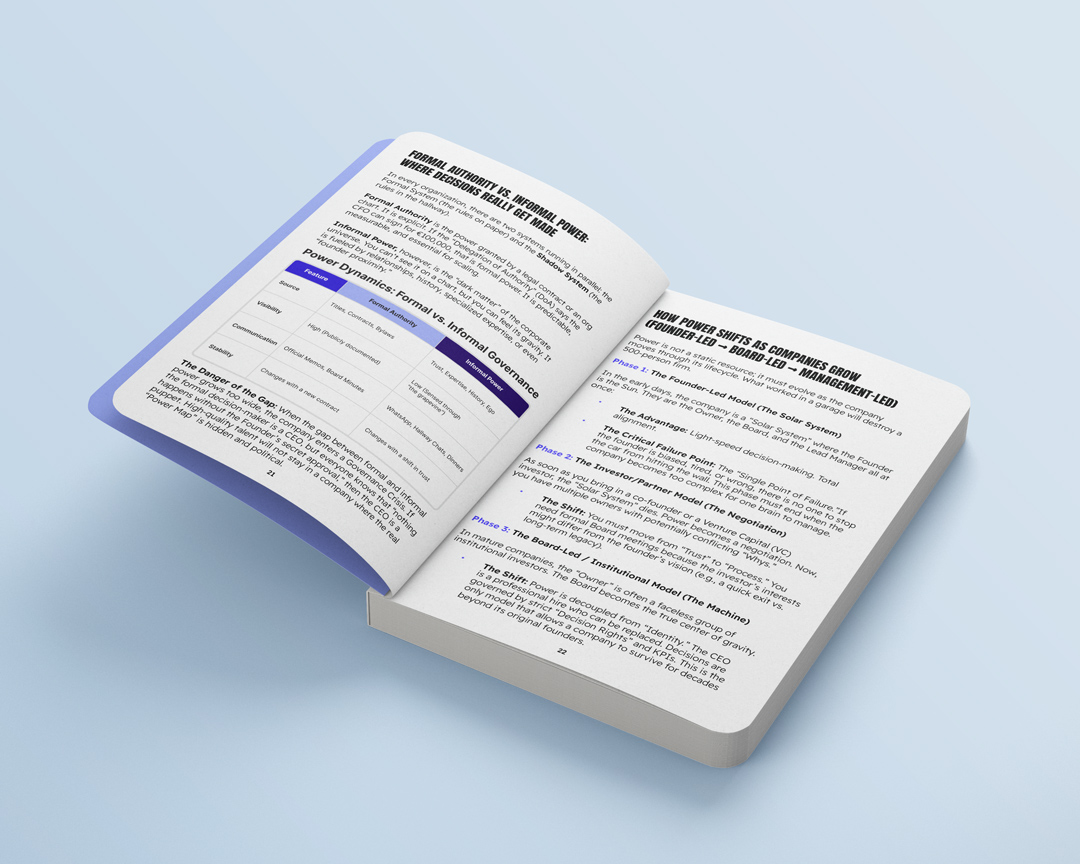
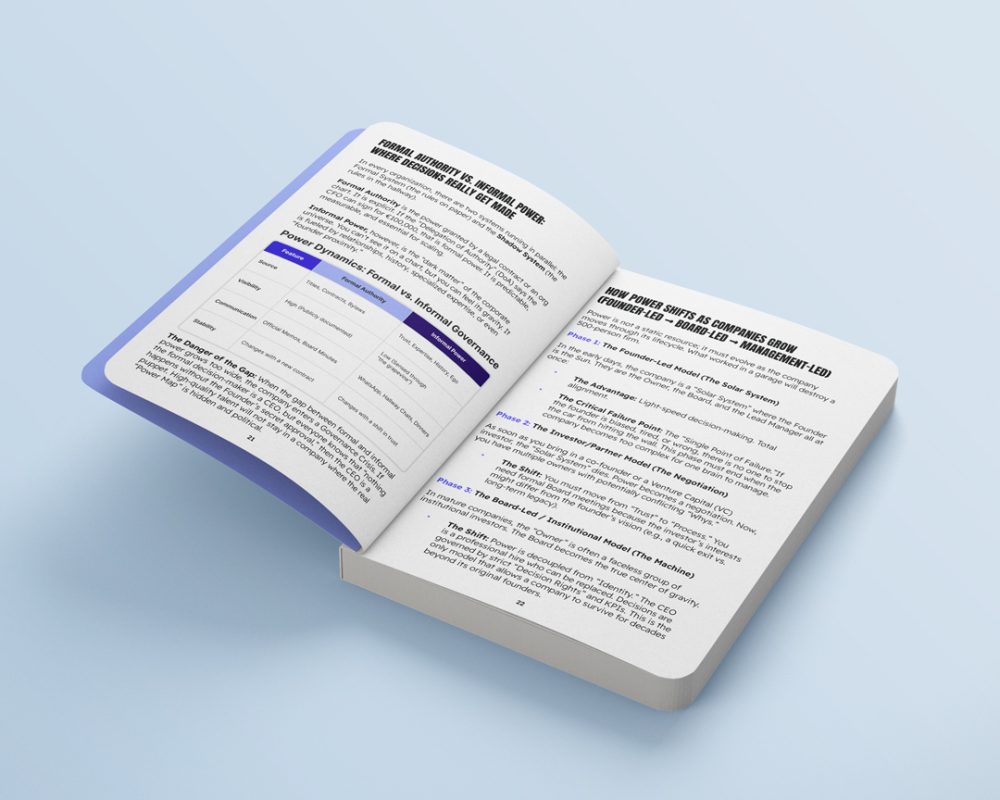
- Formal Authority vs. Informal Power
- How Power Shifts as Companies Grow
- Ownership Structures and What They Mean for Control
- Mapping Influence: Who Has Veto Power, Who Has Voice, Who Has Neither
- How to Draw Your Company’s Actual Power Map
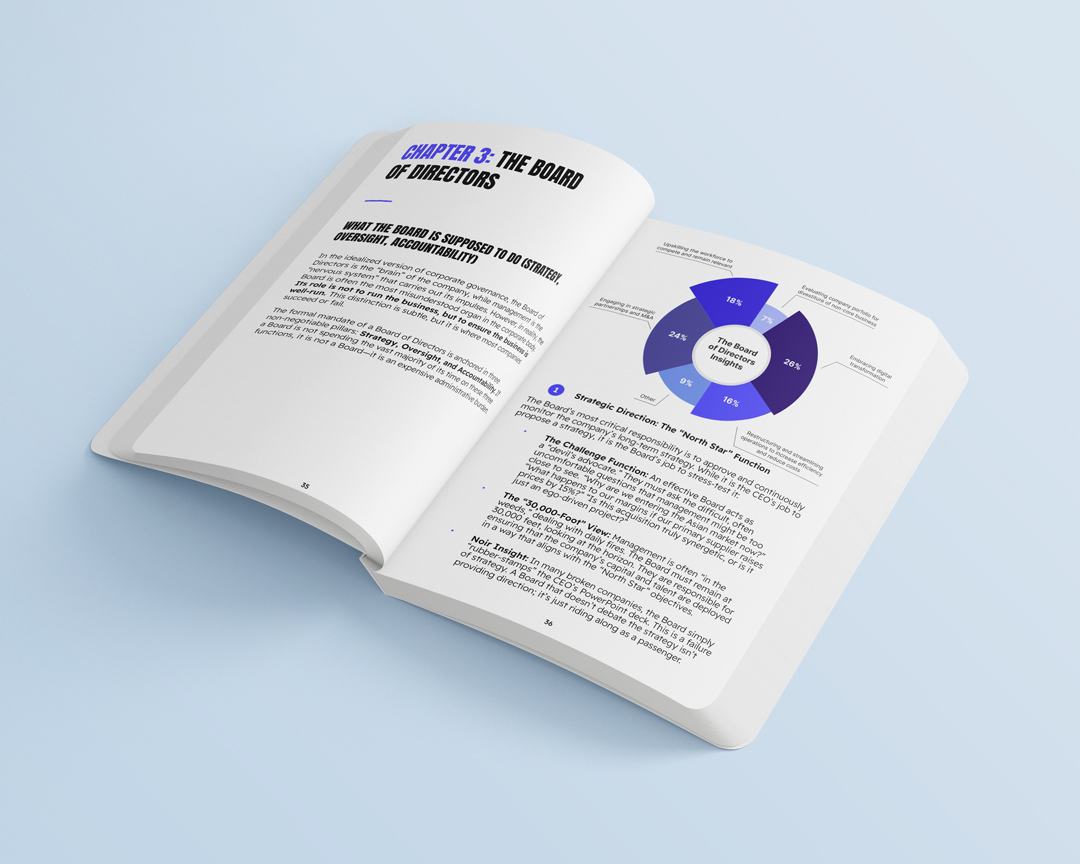
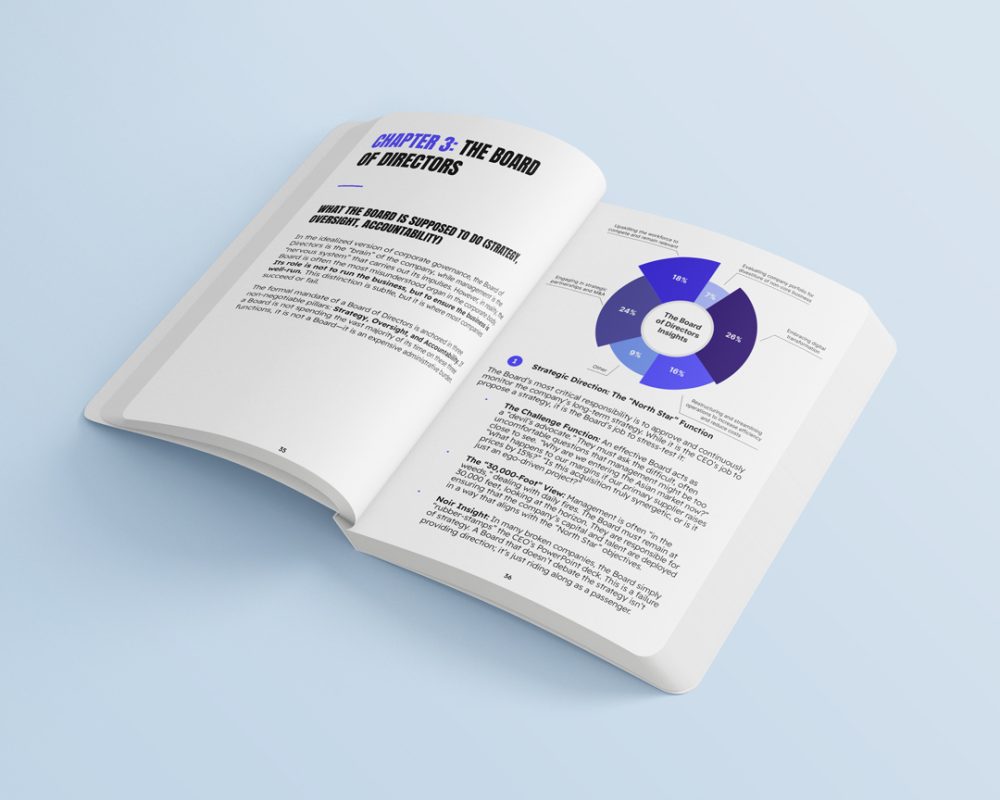
- What the Board Is Supposed to Do: Strategy, Oversight, Accountability
- What Boards Actually Do in Most Companies (and Why It’s Not Enough)
- Board Types: Advisory vs. Governing vs. Rubber-Stamp
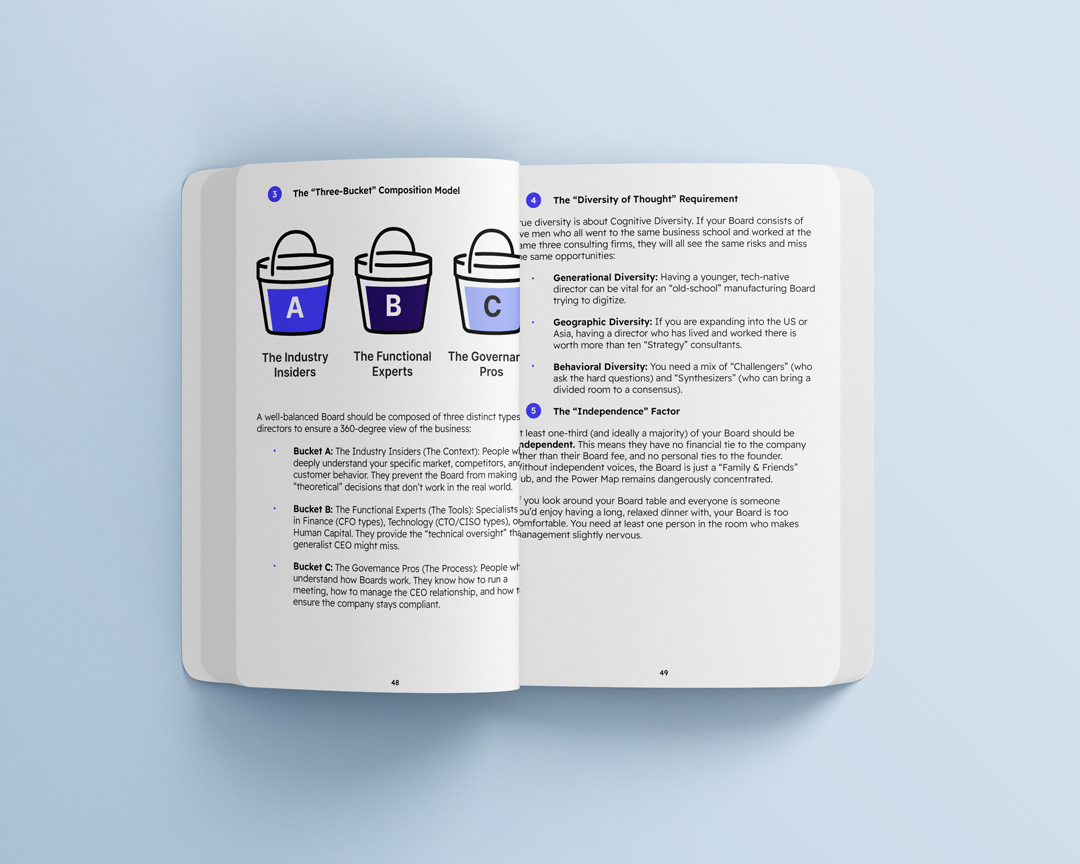
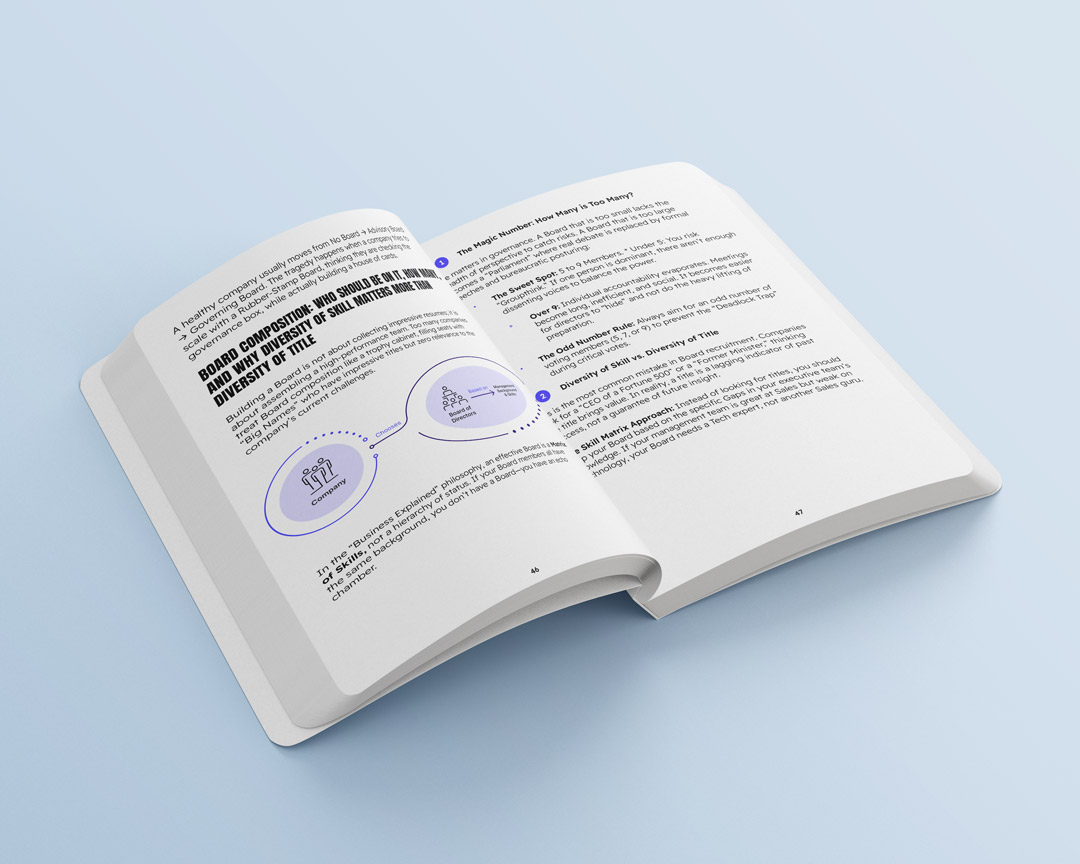
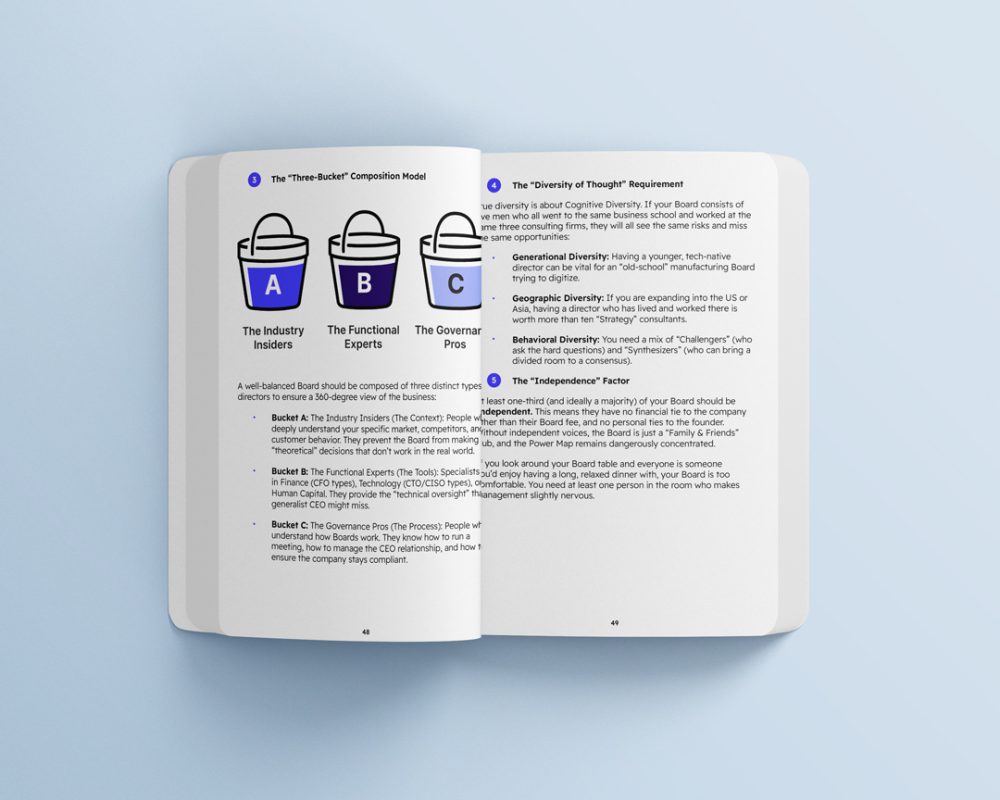
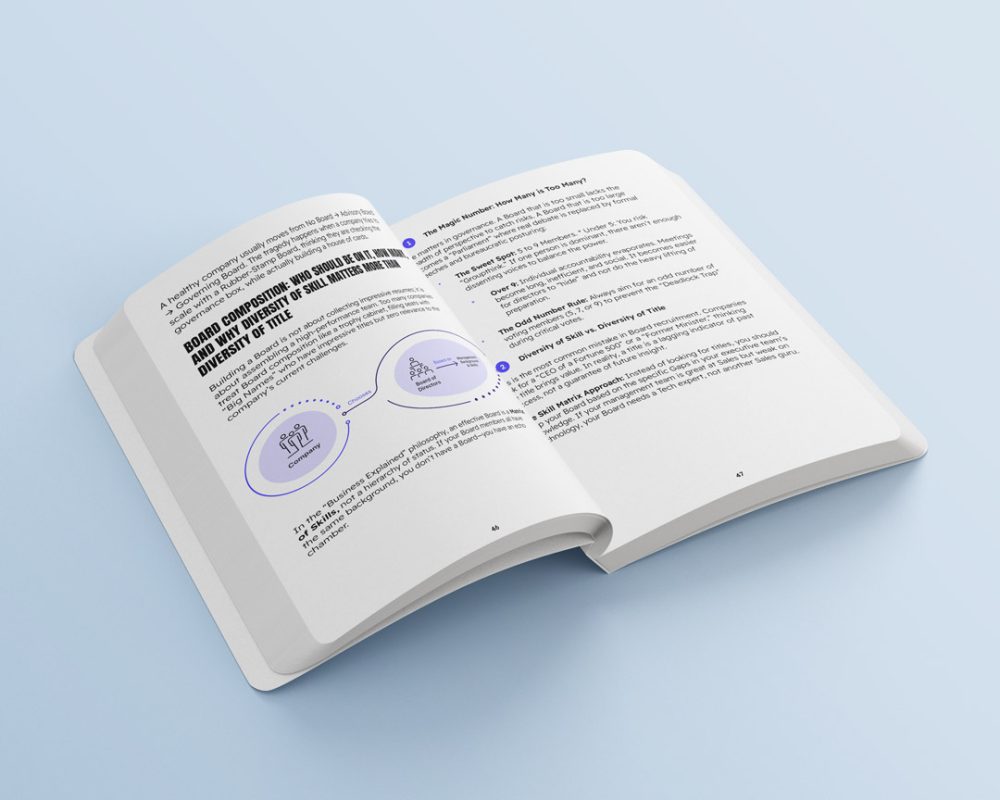
- Board Composition and the Role of Independent Directors
- Board Committees: Audit, Compensation, Nomination
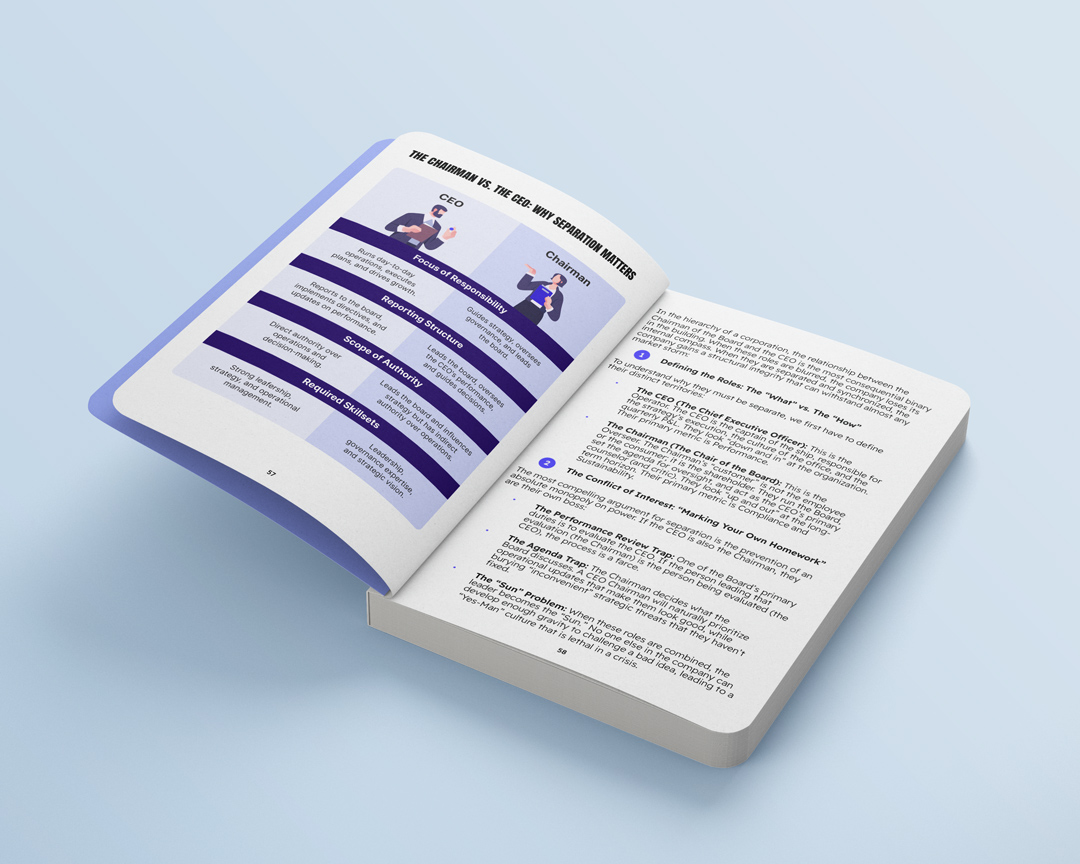
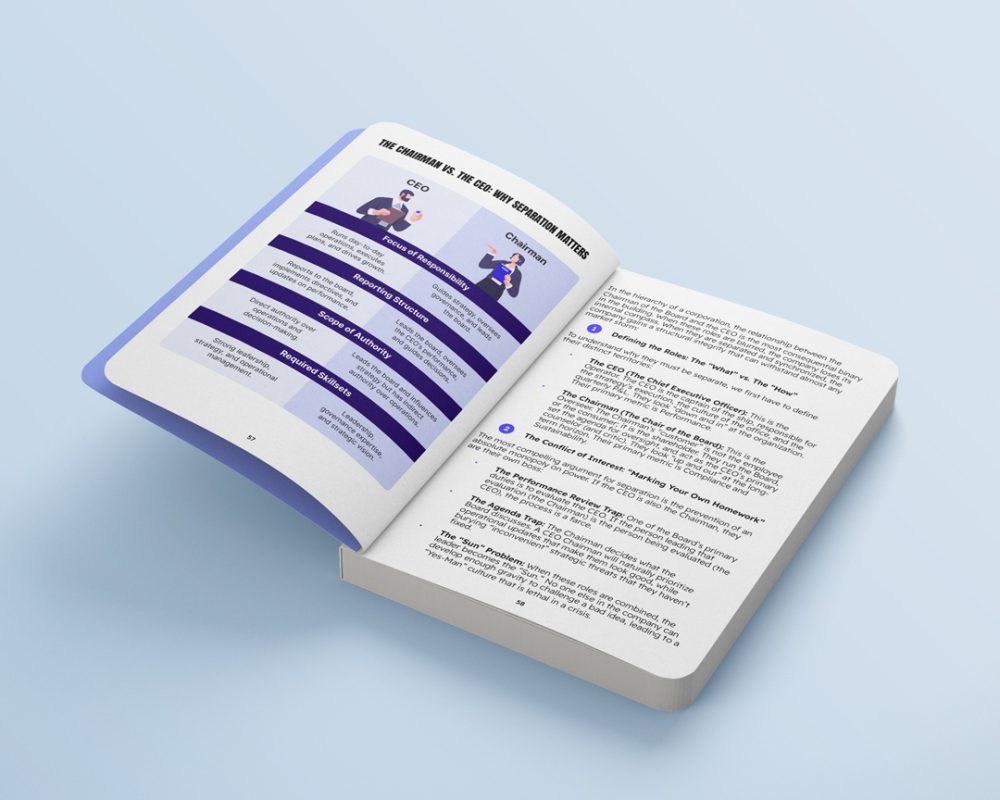
- The Chairman vs. the CEO: Why Separation Matters
- Signs of a Dysfunctional Board
- The Owner’s Job vs. the Board’s Job vs. Management’s Job
- Where the Boundaries Blur and Where They Must Not
- The Founder Problem: When the Owner Is Also the CEO Is Also the Board
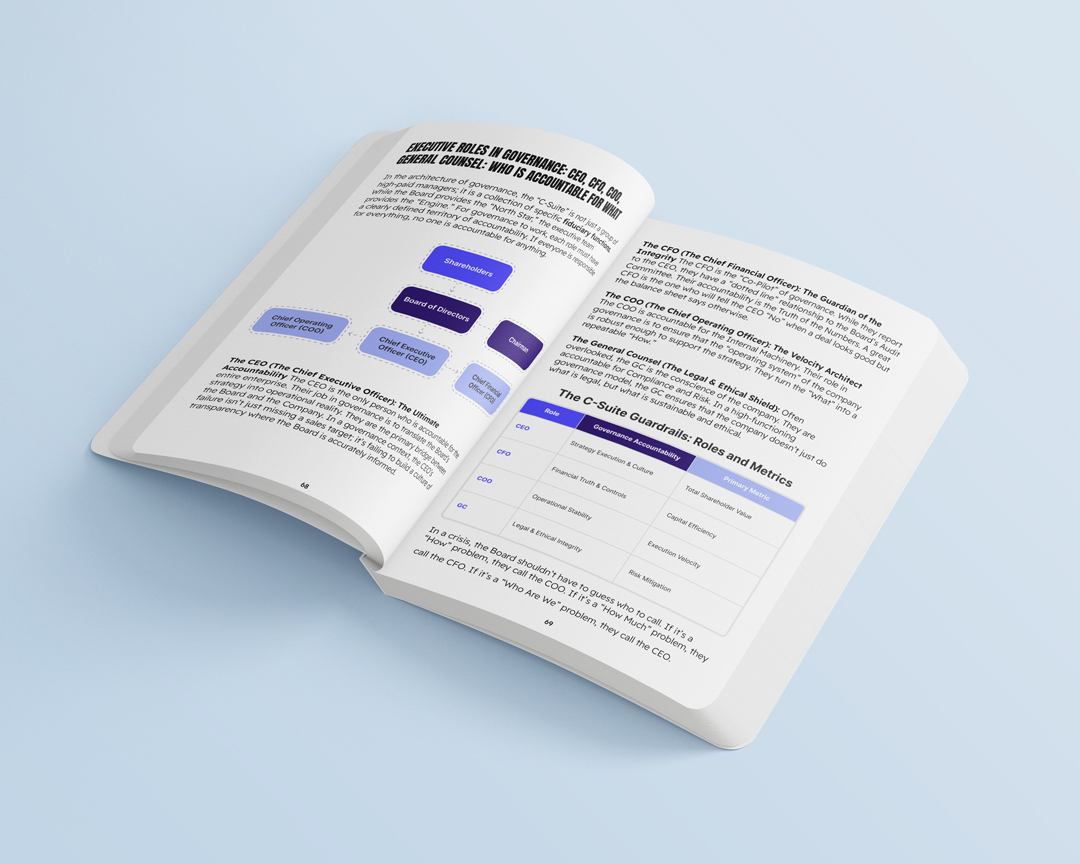
- Executive Roles in Governance: CEO, CFO, COO, General Counsel
- The Corporate Secretary: The Most Underrated Governance Role
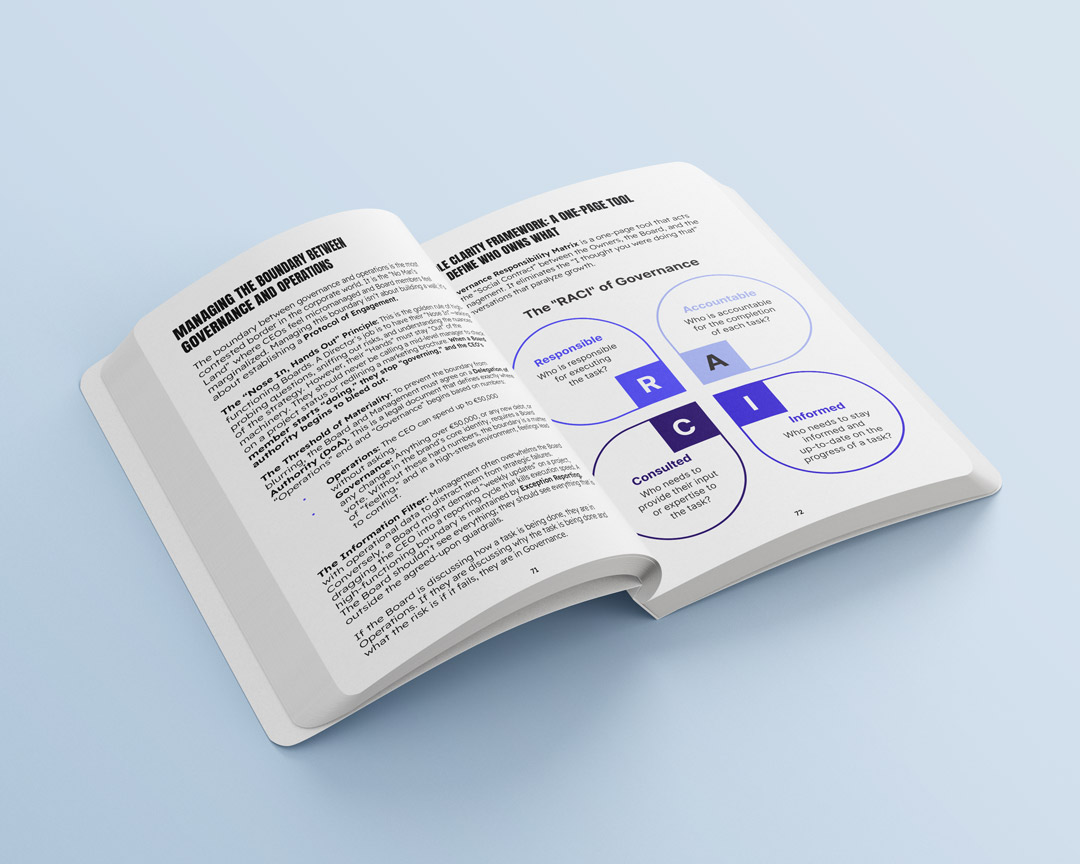
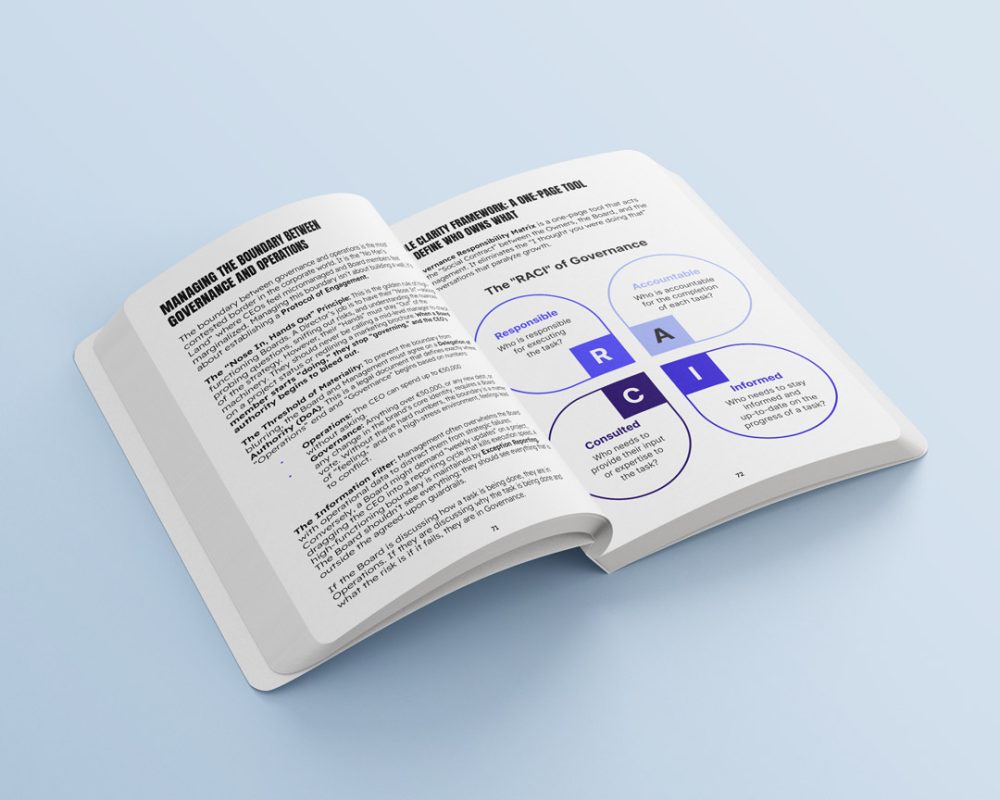
- Role Clarity Framework: A One-Page Tool to Define Who Owns What
- Why Most Companies Don’t Actually Know Who Decides What
- Strategic vs. Operational vs. Financial Decisions: Who Owns Each
- The Decision Rights Matrix
- Delegation Without Losing Control
- Reserved Matters: What Should Never Be Delegated
- Decision Bottlenecks: How to Spot Them, How to Fix Them
- Speed vs. Control: Finding the Right Trade-Off
- Why Accountability Collapses: Unclear Roles, No Consequences, Information Gaps
- The Accountability Chain: From Shareholders to the Board to the CEO to the Team
- Reporting and Oversight: What Information Flows Where, How Often, in What Format
- The Four Risks Boards Must Monitor: Strategic, Financial, Operational, Reputational
- Fiduciary Duties Explained Plainly: Duty of Care, Duty of Loyalty, Duty of Good Faith
- Conflicts of Interest and Related-Party Transactions
- Compliance Essentials: What Every Company Must Follow
- Building a Risk Register That the Board Actually Uses
- Why Most Governance Advice Is Written for Public Companies and Why That’s a Problem
- Private Company Governance: What Changes When There’s No Stock Exchange Watching
- Family Businesses: Separating Family Dynamics from Business Decisions
- The Family Council and Family Charter
- Startup Governance: What Founders Need Before, During, and After Raising Money
- Investor Governance Rights: Board Seats, Veto Rights, Information Rights
- Shareholder Agreements as Governance Documents
- Scaling Governance: What to Add at 10 People, 50 People, 200 People
- The Founder Who Wouldn’t Let Go (Control Hoarding)
- The Board That Looked the Other Way (Oversight Failure)
- The Executive Team with No Boundaries (Role Confusion)
- The Investor Who Hijacked the Company (Power Imbalance)
- The Family Business That Imploded (Governance vs. Relationships)
- The Early Warning Signals Most Leaders Miss
- What Recovery Looks Like: Rebuilding Governance After a Crisis
- Start with an Audit: Assess Your Current Governance in 30 Minutes
- Define Your Power Map
- Clarify Roles and Boundaries
- Assign Decision Rights
- Install Accountability and Reporting Mechanisms
- Set Up Risk Oversight
- Document Everything in a Governance Charter
- What to Fix in the First 30 Days
- What to Build in the First 90 Days
Part 2: The Power Map
Part 3: The Board of Directors
Part 4: Roles, Boundaries, and the Lines Between Them
Part 5: Decision Rights
Part 6: Accountability, Risk, and Protecting the Company
Part 7: Governance for Private Companies, Family Businesses, and Startups
Part 8: When Governance Fails: Real Patterns, Real Consequences
Part 9: Building Your Governance System





70 Products Included
All Products Special
Order our bestselling business bundle now and save a whopping $4,776 compared to buying each product separately.
Get all 70 Products for just $196 
 Risk-free Purchase: Full refund within 30 days
Safe and Secure Checkout


This is our LOWEST PRICE EVER - don’t miss out!
Testimonials

98.5%
Exeptional feedback from our readers




Additional information
| Brands | Business Explained |
|---|---|
| Purchase options | All Products Special Offer, Single eBook Purchase, Starter Pack |
Black Friday Sale

ultimate offer
All Products Special
$196$326
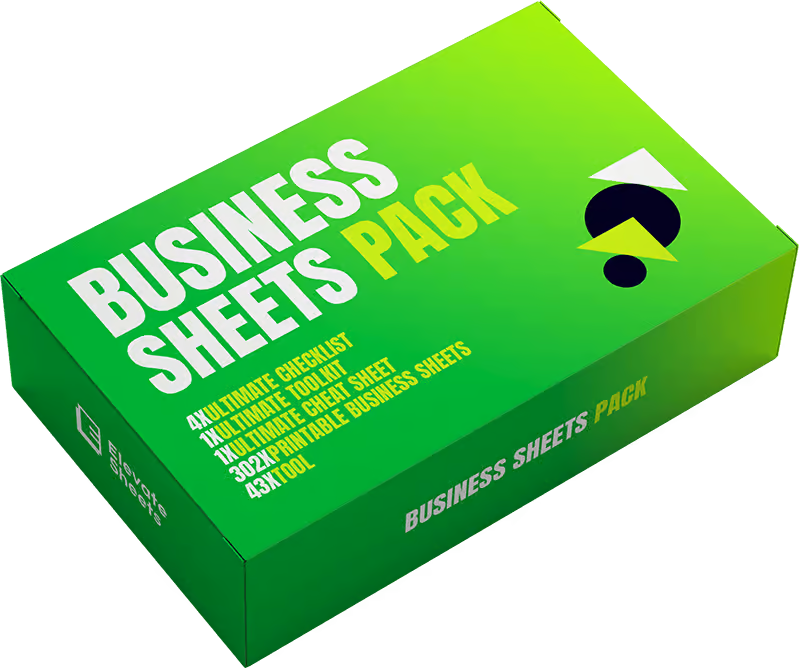
You get all 70 eBooks, Checklists and Tools!
Risk-free Purchase: Full refund within 30 days
Safe and Secure Checkout


 Lowest Price Ever!





 Your Products
 Refund Request
 FAQs